What can be verified on the published website
Get Beauty is a cosmetics brand storefront in the DDRW portfolio. This breakdown examines the visible product and decisions worth considering when preparing a similar website. We do not assess sales or reconstruct the client's internal processes: that would require separate sources.
At getbeauty.pro, you can see product photography, a new-arrivals section, search and links to the shop, blog and contacts. Purchase buttons on the homepage lead to Wildberries. The published website's footer credits DDRW and links to our website. These elements verify the public storefront's implementation and authorship; they do not prove the commercial effectiveness of each decision.
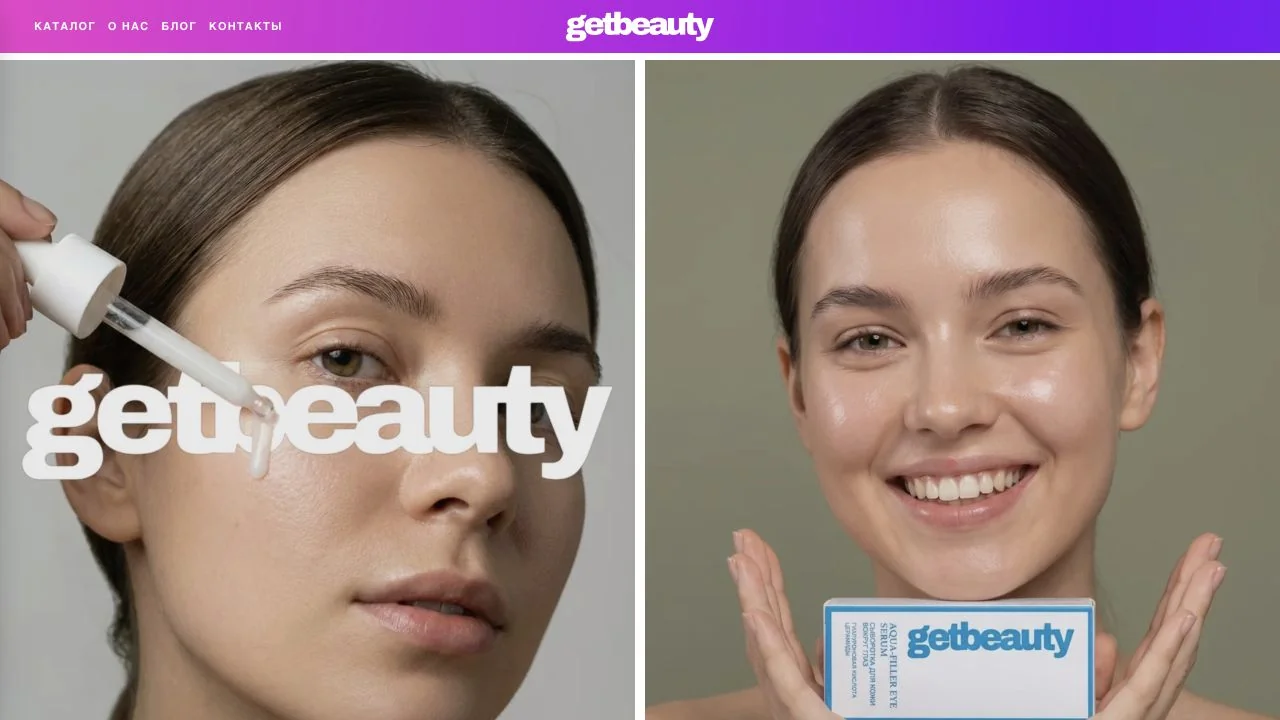
The image shows the website from the DDRW case study. This article's cover illustration is editorial artwork, not a screenshot of the client's product.
Photography connects discovery with selection
In the Get Beauty implementation, products are central to the visual presentation. Visitors discover the brand through images and can then explore the range. This is an observable page structure. The public storefront cannot establish which design alternatives were discussed earlier or how the photographs affected purchases.
For a new cosmetics project, we recommend separating the purposes of photography in advance. A brand image conveys character, a product shot helps people examine the packaging, and a usage photograph explains context. One attractive banner does not necessarily answer every question a person has when choosing a particular product.
When preparing materials, make a table: product, required angles, image purpose, caption and publication location. Check whether the product itself remains visible in a narrow mobile crop. If cropping removes the packaging and important details, use a different angle or a separate composition. These are our recommendations for future projects, not claims about additional work performed for Get Beauty.
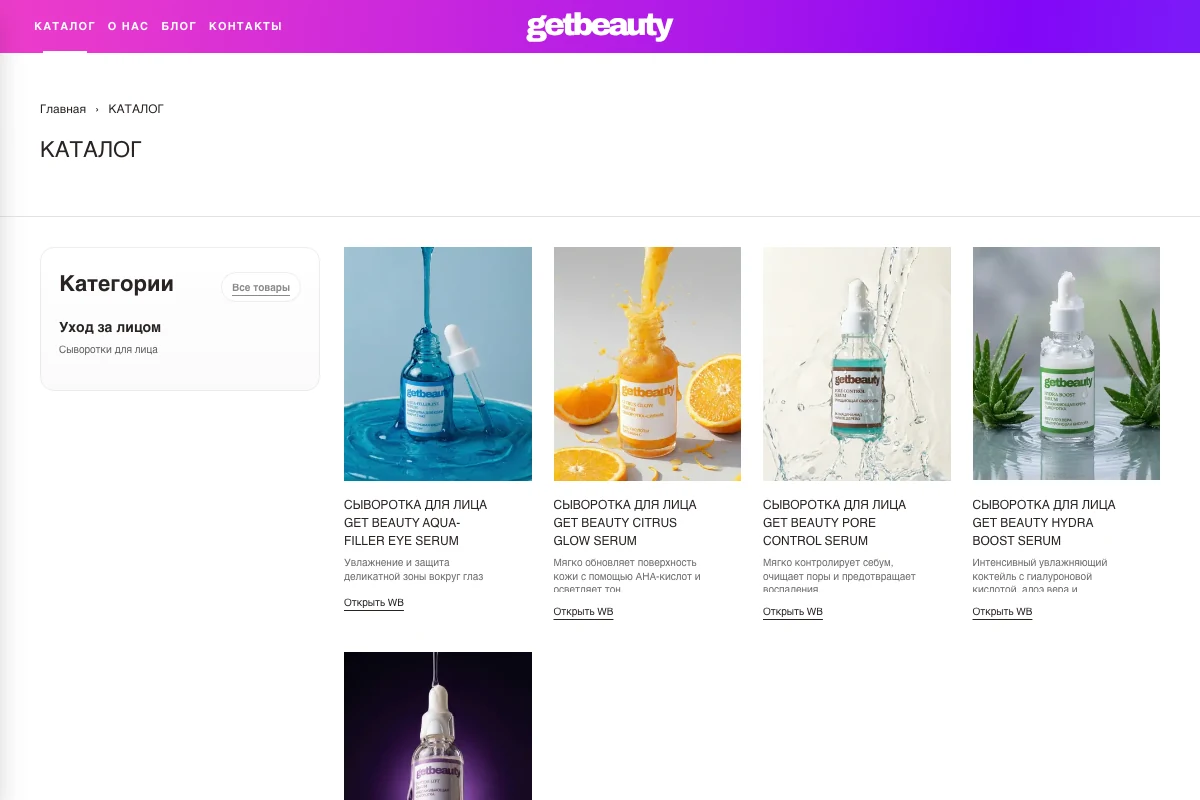
Screenshot of the Get Beauty catalog dated October 12, 2026: individual photographs help visitors move from discovering the brand to choosing a product.
Two ways to explore the range
The DDRW case records shared navigation, a shop and search. Together, these allow for two distinct intentions: browsing sequentially and finding a known product. A search field alone does not establish the quality of its results; this breakdown did not include a separate search acceptance test covering queries and errors.
Before developing a similar storefront, write down several user questions. One person knows the product name. Another remembers only its purpose. A third arrived through a photograph and wants to identify what it shows. For each question, define the starting page and expected next step.
These scenarios then become acceptance-test material. Check an exact query, a typo, no results and returning to the catalog. On a phone, check separately whether the keyboard obscures the action. Agree test examples using real names from the future product range before populating every product page.
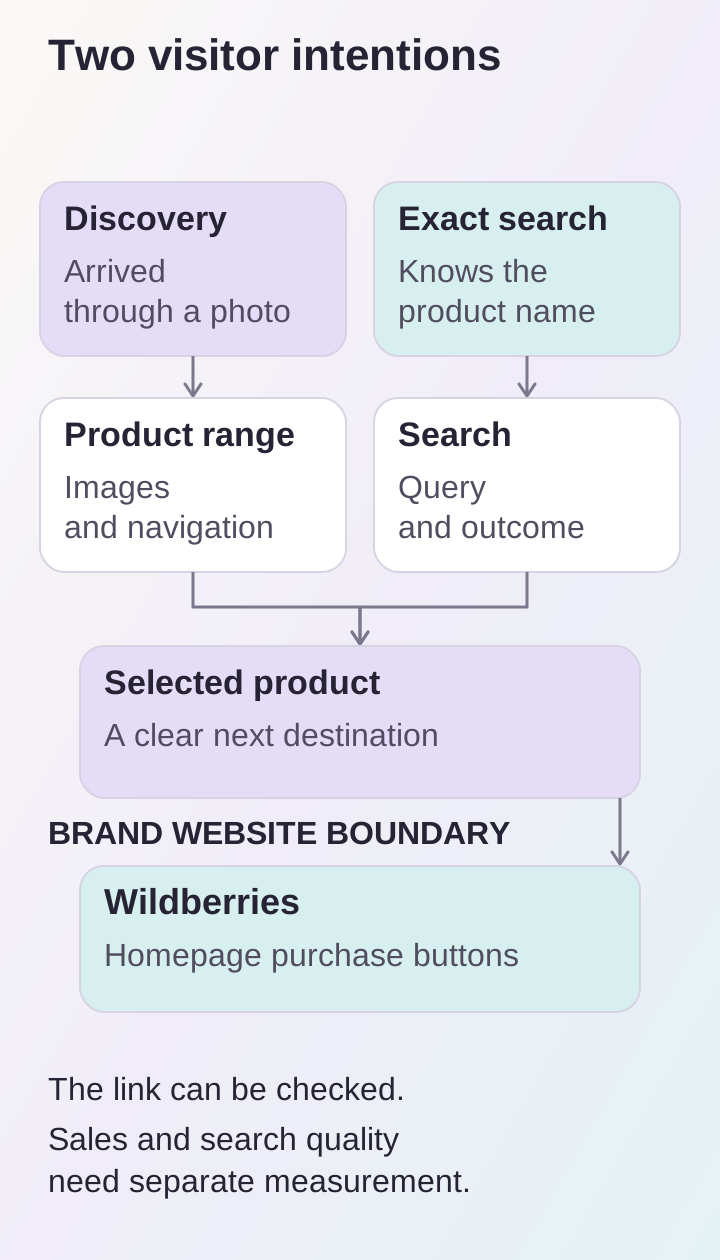
An intent map for testing a similar storefront: the presence of search does not prove result quality, and a Wildberries click does not confirm a purchase.
Buying on an external platform requires a clear transition
Public “Buy” buttons on Get Beauty's homepage lead to Wildberries. This is a verifiable transition from the brand website to an external purchase channel. Our review did not include placing an order or evaluating product availability, platform terms or the store's internal operations.
For a similar project, agree precisely what the button means. It may lead to a specific product, a brand collection or an internal page listing buying options. Its wording and destination should match the action. Continuing a selection is easier when visitors do not have to search again for the product they were just shown.
Assign someone to keep the links current. Updates to the marketplace range and changes to the brand page can happen independently. Maintenance should include checks for changed addresses, discontinued products and mobile transitions. Automatic click measurement is useful, but a click does not mean a purchase.
Contacts and content support trust
The published website provides the brand's contact details and a link to its blog. In the case study, these sections connect through the main navigation. We confirm their presence without claiming that visitors use them at a particular frequency or that they increased inquiries.
For a new brand, choose content around the audience's questions. Before writing, collect product information and approved wording from the responsible specialists. An attractive presentation should not turn into unsupported promises of results. If an article explains how to use a product, have the product owner approve it and link it to suitable items.
Test contacts as a scenario too: a person finds an address, understands what they can ask about and chooses an available channel. A menu section does not replace that test. A short list of real questions is useful for launch, alongside a list of completed pages.
What is established and what needs measurement
Evidence for this case consists of the working public storefront, the recorded description of DDRW's contribution, the portfolio image and the client footer's link to our studio. We do not add unknown server technologies, baseline conversion figures, team timelines or testimonials absent from the sources.
The next level of evidence would require agreed data: visits, purchase-channel clicks, inquiries and purchases that can be correctly attributed to a channel. Comparisons must account for the period, traffic sources and changes to the product range. Until then, it is reasonable to describe the interface and completed work.
If you are preparing a business website or a storefront design, start with the product range, photographs and path to purchase. Share existing materials and list visitors' questions. Discuss the first-release scope through DDRW contacts, and see the published implementation in the Get Beauty case.