Web platforms and account areas
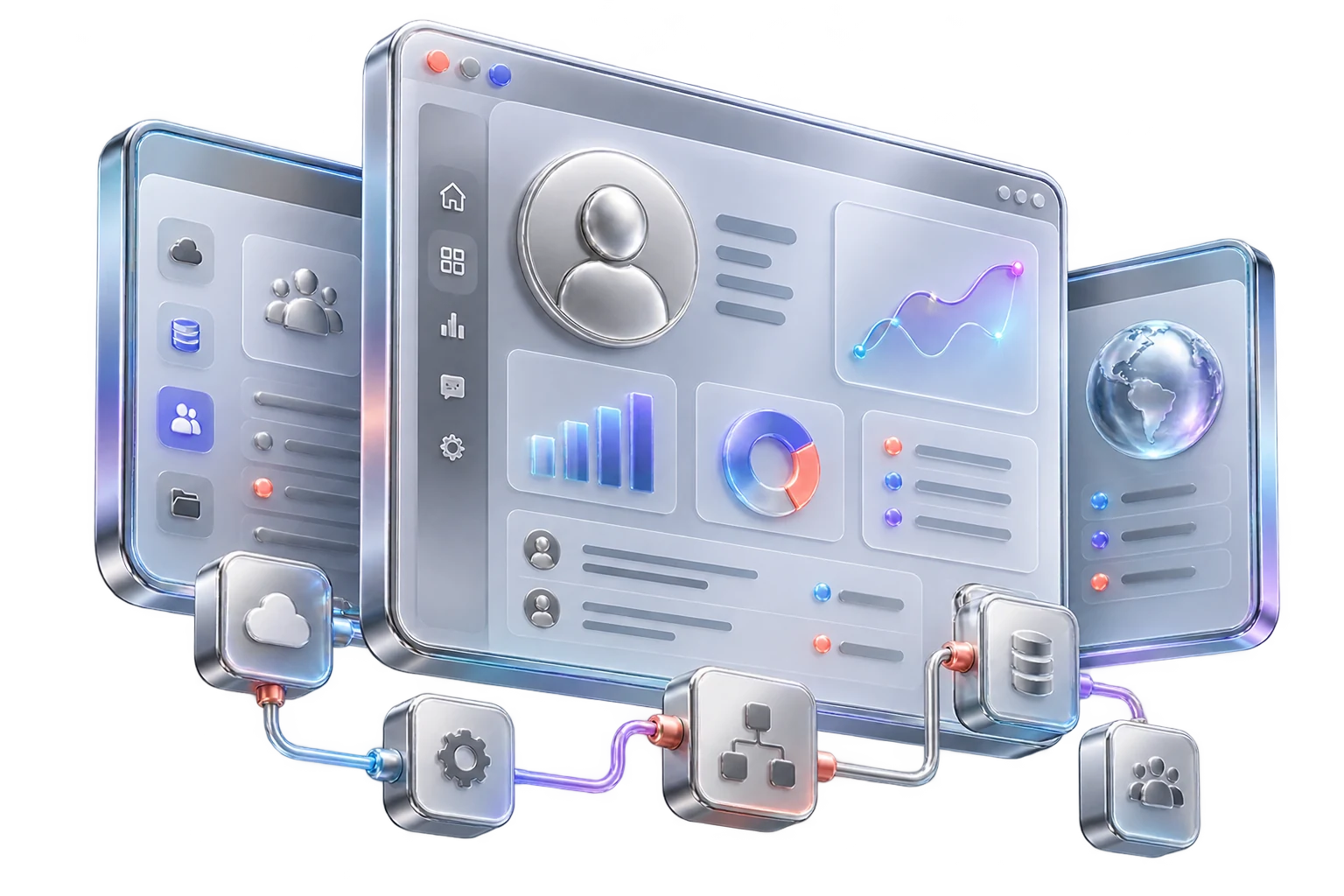
We develop web platforms and account areas where users see their data and perform authorized actions: submitting requests, checking statuses or recording work results. We design roles, status transitions and server checks. ANTA connects the website with inquiry processing; Meetki illustrates a process from meetings to agreements and checkpoints.
- Starting budget
- from ₽600,000
- Delivery timeline
- 12–24 weeks
Who it is for and the tasks we solve
For companies where requests and approvals pass through several employees or systems, and teams launching an online service. Start with one complete process: who creates a record, who gains access, which actions change its state and what counts as completion.
Customer account area
The user’s own data, history and permitted actions. Every operation has defined permissions and a server-side record-ownership check.
Team inquiry processing
A request queue, assigned owners and agreed statuses. The ANTA case connects a public catalog and forms with internal inquiry processing.
Connected service workflow
We connect records into an action sequence. The Meetki case and presentation explore an example: meeting → agreement → checkpoint → next step.
External-system exchange
After checking available APIs, we define exchange direction, duplicate handling and failure actions. Integrations are estimated separately from the basic account area.
What we do and what you receive
- Role, data and status-transition map for the agreed workflow
- User account area and administrator interface with the agreed screens
- Server checks for permitted actions and record access
- Description of errors and repeat-action handling; integrations follow a separate agreed list
- Acceptance scenarios, deployment procedure and service instructions
How we work
- 01
Process model
We examine a real example from record creation to completion, defining roles, fields, statuses and mandatory constraints.
- 02
Prototype and first-version boundaries
We connect screens into a complete scenario, identifying external integrations, data migration and later-stage features separately.
- 03
Implementation
We build the interface and server logic. Permissions are checked when reading data and performing actions, not just by hiding buttons.
- 04
Acceptance and handover
We test agreed actions for each role, access refusals, errors and retries. We hand over launch instructions; support and development are agreed separately.
Pricing and timeline
Starting project price
- Budget
- from ₽600,000
- Delivery timeline
- 12–24 weeks
Included in the starting scope
A basic service version using an existing core: user account, administrator role and one main workflow. Screens and data are defined before development; external integrations are estimated separately.
Estimated separately
Complex data migration, additional processes, any external integrations, native mobile apps, round-the-clock support, infrastructure and external-system licenses.
The estimate includes project management, specialist work, testing and handover within the agreed scope.
The starting price applies to the scope described. The final price depends on your task: after our discussion, we agree on the scope, estimate and schedule. The timeline depends on materials, access and stage approvals.
Estimates depend on role counts, status transitions, independent processes, external APIs, source-data quality and load requirements. We first define first-version boundaries, the access matrix and scenario completion criteria. Additional integrations, migration and operational commitments are estimated separately.
What to prepare for an estimate
- One real workflow: who begins, what each participant does and how it ends
- Roles, statuses and anonymized record examples; which data other users must not see
- External systems, API documentation and existing-data migration requirements
- Expected record and request volumes, mandatory constraints and first-version features
Related projects
All related projects from our portfolio.
Meeting and agreement platform
Meetki
A workspace for scheduling meetings, preparing conversations and managing agreements. Schedules, maps, an AI assistant and video rooms connect a meeting to outcomes, milestones and next steps.
Task and solutionView projectWebsite and enquiry system
ANTA
We developed ANTA’s website: a service catalog with detail pages, a portfolio, enquiry forms and an enquiry-processing workspace. The website combines business presentation with handling incoming requests.
Task and solutionView projectCommerce and social platform
MYRU
A commerce and social platform combining products and services, a feed, profiles, chats, live streams and clubs.
Task and solutionView projectItem exchange
Bonusium
A platform for listing items and agreeing on an exchange, sale or exchange with an additional payment.
Task and solutionView projectDigital token verification
RRID
A digital-token authenticity project: local signature verification and a separate layer of usage rules.
Task and solutionView projectDigital signage
NVHUB
The NVideoHub product website — television for business with AI video, ready collections and your own materials.
Task and solutionView projectBefore the project begins
- A B2B dealer portal: individual price lists and wholesale orders
- NGINX vulnerabilities in October 2026: checking and updating your server
- How to choose a website developer: 12 questions and comparing estimates
- Website security without myths: 10 diagrams for protecting data and access
- How a modern web service works: from click to response in 10 diagrams
- AI engineering: from choosing a model to a working application — 10 diagrams explained
Questions before we start
How does an account area differ from an ordinary website?
An ordinary website shows general information. An account area works with a particular user’s data and permitted actions. It therefore needs a data model, authorization, access rules and server checks for every operation.
How much does a basic platform cost, and how long does it take?
Guidelines are from ₽600,000 and 12–24 weeks for a version using an existing core: a user account, administrator role and one main process. We define screens and data before development. External integrations, complex migration, additional processes and infrastructure are estimated separately.
Which cases can we review before ordering?
ANTA covers the path from a public service and form to team inquiry processing. Meetki shows meetings, agreements and checkpoints, with a website and presentation available. These materials explain project scope and structure but establish neither load performance nor every closed workflow.
Can we start with one process and add AI later?
Yes. We first define a complete useful process and its data. AI is added as a separate feature with sources, access permissions, result-checking rules and employee handover. An account area does not mean AI is included in the basic price.
How are permissions and platform readiness checked?
Before development, we prepare a “role → data → action” matrix and acceptance scenarios. We test permitted journeys, attempts to open another user’s record, prohibited actions and invalid data. Load requirements and separate security checks are explicitly included in the plan.
Can you connect our CRM and migrate data?
First we review the API, constraints and an anonymized data sample. We agree field mapping, exchange direction, retries, errors and conflict-resolution rules. Migration and integration enter scope only after a separate estimate.
What is handed over after launch?
The agreed service, deployment and operating instructions, an access list and agreed acceptance results. Infrastructure ownership, backups, training, support and updates are defined in the project scope; round-the-clock maintenance is not automatic.
Let’s discuss your project
Tell us about your product and the outcome you need. We will define the scope, propose an approach and agree on timing and cost.